


Emergency Heating Repair: The Complete Guide to Restoring Heat Quickly and Safely

A heating system failure rarely happens at a convenient time. More often, a furnace stops working during the coldest nights of the year, when your home relies most on consistent warmth. When temperatures drop, and the system begins blowing cold air, shuts off unexpectedly, or refuses to start at all, the situation can quickly escalate from discomfort to a genuine safety concern. Frozen pipes, falling indoor temperatures, and stress on your household can follow within hours.
Emergency heating repair exists to restore heat quickly, diagnose serious mechanical or electrical problems, and prevent further damage. This guide provides a complete understanding of why heating emergencies happen, what you can safely check at home, which warning signs require immediate professional help, and how technicians resolve the most common furnace failures. You will also learn how repair costs are influenced, how to prevent future emergencies, and what steps help extend the life of your heating system.
Whether your furnace is unresponsive, producing cold air, making unusual noises, or behaving unpredictably, this guide offers the clarity and confidence you need to make informed decisions.
Understanding Emergency Heating Repair
Emergency heating repair refers to urgent service performed when a heating system experiences sudden failure, safety risks, or conditions that cannot wait for a standard appointment. During the winter months, the consequences of losing heat can be immediate and severe, especially for households with young children, seniors, or individuals with health concerns.
A heating emergency typically involves at least one of the following:
No heat present anywhere in the home
Cold air blowing through vents while the system runs
Loud mechanical noises that indicate internal failure
Burning, electrical, or metallic smells
Water is pooling around the furnace
Rapidly falling indoor temperatures
Frequent or erratic system shutdowns
Carbon monoxide alarms
Gas odors or signs of combustion issues
Emergency heating repair prioritizes fast arrival, immediate diagnosis, and safe restoration of heat to protect both the home and its occupants.
Why Heating Emergencies Happen
Heating systems are complex machines composed of electrical components, safety sensors, fuel delivery parts, and airflow systems. When one element malfunctions, the entire system can fail.
Below is an expanded table summarizing the most common causes of emergency heating issues:
Table 1: Common Causes of Heating Emergencies
Cause | Description | Potential Warning Signs |
Ignition Failure | Burners fail to ignite due to igniter wear or gas issues | Clicking sounds, no warm air, repeated start attempts |
Airflow Blockage | Restricted airflow overheats the furnace and triggers a shutdown | Cold air from vents, burning smell, clogged filters |
Flame Sensor Malfunctions | The sensor fails to detect flame and shuts off the burners | Brief bursts of heat followed by cold air |
Electrical Failures | Control board or wiring issues prevent operation | Furnace unresponsive, tripped breakers |
Gas Supply Problems | Inadequate fuel supply prevents ignition | Furnace tries to start repeatedly without heat |
Condensate Blockages | Blocked drain lines shut down high-efficiency models | Water leaks, shutdowns after short cycles |
Mechanical Wear | Blower motor, belts, or bearings fail over time | Grinding noises, weak airflow |
Thermostat Failure | Miscommunication prevents furnace start-up | No response from system, inaccurate readings |
Airflow Restrictions and Overheating
Airflow problems are responsible for a large percentage of heating emergencies. When airflow becomes restricted — usually due to dirty filters, blocked vents, or duct issues — the furnace overheats. Once internal temperatures become unsafe, a limit switch activates and shuts down the burners. The blower may continue running, which explains why homeowners often feel cold air coming from vents even though the furnace is technically "on."
Airflow-related emergencies are common in households that forget to replace air filters regularly or have furniture blocking supply or return vents.
If you are experiencing cold air from the vents, our full breakdown of cold-air furnace issues offers a clear explanation of these airflow-related patterns.
Flame Sensor Malfunctions
A flame sensor is a small but essential component. It monitors whether the burners have ignited and ensures the furnace does not release unburned gas. When the flame sensor becomes dirty or fails, the furnace ignites briefly and then shuts down for safety.
This results in:
Warm air for a few seconds
Sudden cooling
Repeated start attempts
Cold air blowing through vents
This behavior often occurs after long periods without maintenance.
Electrical Failures
Heating systems rely heavily on electrical components, including the blower motor, control board, thermostat wiring, and safeties. When electrical failures occur, the furnace may:
Become completely unresponsive
Trip the breaker repeatedly
Start and stop abruptly
Fail to ignite
Electrical failures can be unpredictable and are especially common in older furnaces. They require professional diagnosis.
Gas Supply Problems
Gas supply interruptions can occur due to partially closed valves, faulty pressure regulators, or issues with the gas meter. When fuel supply is inconsistent, the furnace may:
Attempt ignition repeatedly
Shut down for safety
Run the blower without heat
For homeowners who want a deeper understanding of how these symptoms unfold during no-heat conditions, you can explore our complete guide on emergency furnace troubleshooting.
Mechanical Wear and Component Failure
Blower motors, belts, bearings, and inducer motors eventually wear out. As these parts degrade, the system struggles to circulate heated air or complete its startup sequence.
Symptoms include:
Grinding or squealing noises
Weak airflow
Inconsistent heating
Sudden shutdowns
Mechanical problems can build slowly and become noticeable only during extreme temperatures.
Condensate Line Blockages in High-Efficiency Furnaces
High-efficiency furnaces generate condensation. When the condensate line becomes clogged or frozen, the system detects unsafe conditions and shuts down. Water may pool around the furnace, creating additional hazards.
This situation is common during extreme cold or in homes with older drain systems.
Thermostat Communication Problems
Sometimes the issue is not the furnace at all, but the thermostat. When communication fails:
The furnace receives incorrect signals
Temperature readings may be inaccurate
Heat cycles become irregular
The furnace may not turn on at all
Older or poorly placed thermostats are especially prone to failure.
Understanding Early Warning Signs
A heating system almost never fails silently. Most emergencies begin with subtle symptoms that escalate.
Here is an expanded table showing early warning signs and what they typically indicate:
Table 2: Early Warning Signs of Heating System Trouble
Warning Sign | What It Suggests | How Quickly It Can Become an Emergency |
Uneven heat in rooms | Airflow restriction or duct leak | Several days |
Short cycling | Overheating, sensor issues | Hours to days |
Cold air through vents | Ignition failure or airflow blockage | Immediate |
Burning or electrical odors | Electrical failure | Immediate |
Loud banging noises | Blower or motor failure | Immediate |
Water near furnace | Condensate blockage | 1–2 days |
Rising utility bills | Inefficiency or worn components | Weeks to months |
Furnace struggling to start | Ignition or thermostat issues | Hours to days |
Recognizing these early signs can help homeowners act before their system shuts down completely.
Safe Steps Before Calling for Emergency Heating Repair
Before contacting a professional, homeowners can safely perform the following checks:
1. Check the Thermostat
Make sure the system is set to “Heat,” the temperature is above room level, and the fan is set to “Auto.”
2. Replace Thermostat Batteries
A dead battery can mimic furnace failure.
3. Check the Circuit Breaker
Reset a tripped breaker once. If it trips again, this indicates deeper issues.
4. Confirm the Furnace Switch Is On
This switch is often accidentally turned off during storage or cleaning.
5. Check the Furnace Door
A loose door prevents the furnace from running due to a safety switch.
6. Replace the Air Filter
A clogged filter is one of the top causes of overheating and shutdowns.
7. Ensure Vents and Returns Are Clear
Furniture or curtains may be blocking airflow.
8. Clear the Outdoor Exhaust and Intake
Snow, ice, or debris can block critical airflow paths.
If these steps do not restore heat, professional help is necessary.
When Emergency Service Is Required
There are moments when waiting for regular service hours is unsafe or risky.
Emergency service is essential when:
Indoor temperatures are dropping rapidly
The furnace blows only cold air
Burning or electrical smells occur
The carbon monoxide alarm activates
Gas odors are present
Water leaks appear around the furnace
The heating system cycles on and off repeatedly
To better understand what happens during urgent heating support, you can review our complete resource on rapid emergency heating service when temperatures drop.
Why a Furnace Will Not Turn On
A furnace that does not turn on is one of the most urgent heating problems a homeowner can face. When your system remains completely unresponsive despite thermostat adjustments or breaker checks, it signals that something deeper is preventing the furnace from starting its heating cycle.
Heating systems are built with layers of safeties and control signals. If any one of these fails or detects an unsafe condition, the furnace may refuse to run altogether.
Below are the most common causes, each expanded to provide a clearer understanding.
1. Thermostat Communication Problems
The thermostat acts as the furnace’s central command. If it fails to communicate properly, the furnace never receives the instruction to start.
Common causes include:
Dead thermostat batteries
Misconfigured settings
Loose wiring
Internal thermostat failure
Poor placement causing inaccurate temperature readings
Some homeowners initially mistake thermostat issues for furnace failure.
2. Tripped Breaker or Power Interruption
A tripped breaker is common in older homes or during storms. The furnace may appear dead even though the system itself is functioning properly.
If the breaker trips repeatedly, this indicates an electrical problem within the furnace that requires professional diagnosis.
3. Ignition System Failure
Ignition is one of the most delicate stages of furnace operation. If the igniter fails, the burners cannot heat the air.
Signs include:
Clicking sounds
Visible attempt to start
System shutting down silently
Frequent resets needed
If you want a deeper explanation of common causes behind a furnace refusing to start, you can refer to our complete guide that walks through the most frequent start-up failures.
4. Safety Switch Lockouts
Modern furnaces include safety switches that shut down the system to prevent fire, gas leaks, or overheating. A loose furnace door, overheating due to clogged filters, or sensor failure can all trigger a lockout.
5. Blower Motor Problems
If the blower motor cannot move air, the furnace may refuse to start to prevent overheating.
Symptoms include:
Loud humming
Motor trying to spin
Weak or no airflow
Burning smell
6. Blocked Intake or Exhaust Pipes
High-efficiency furnaces rely on PVC intake and exhaust pipes. If snow, leaves, ice, or debris block these pipes, the furnace prevents startup for safety reasons.
7. Control Board Failure
The control board acts as the furnace’s “brain.” When it fails, the system may:
Start partially
Shut down mid-cycle
Fail to ignite
Ignore thermostat signals
Control board issues require specialized testing.
Why a Furnace Blows Cold Air
A furnace blowing cold air instead of warm air is another stressful scenario that often triggers emergency service calls. Homeowners may hear the system running normally but feel no increase in temperature.
Cold air typically signals problems in one of three main categories: airflow, ignition, or fuel supply.
Below is an expanded explanation of each.
1. Fan Setting Incorrectly Configured
If the thermostat fan is set to “On” instead of “Auto,” the blower runs continuously — even when the furnace is not heating. This causes cold or room-temperature air to blow through vents.
2. Clogged or Dirty Air Filter
A severely clogged filter reduces airflow, causing the furnace to overheat. When temperatures reach unsafe levels, the limit switch shuts off the burners while the blower continues running.
This explains why warm air may start and quickly turn cold.
3. Ignition Problems
Ignition issues prevent the burners from heating the air. The furnace may:
Attempt to ignite
Fail to light
Shut down while the blower continues running
4. Flame Sensor Issues
A dirty flame sensor cannot confirm the presence of a flame. The burners shut off after a few seconds, leaving the blower to push cold air.
5. Duct Leaks
Warm air can escape through holes or disconnected ducts, especially in older homes. This results in colder rooms or uneven heating.
6. Fuel Supply Issues
Low gas pressure, closed valves, or an inconsistent fuel supply prevent the furnace from generating heat.
If you are trying to determine why warm air turns cold within minutes, our extended explanation of cold-air furnace patterns provides a complete overview of these symptoms.
Emergency Heating Repair vs Standard Heating Service
Not every heating issue requires emergency service. Understanding the difference helps homeowners make informed decisions.
Standard Service Is Appropriate For:
Mild airflow inconsistencies
Uneven heating
Minor thermostat issues
Non-urgent noises
Heat that is present but reduced
Emergency Service Is Necessary When:
There is no heat
Cold air blows continuously
Electrical or burning odors appear
The carbon monoxide alarm activates
There is a gas smell
Water leaks develop
Loud banging or grinding noises occur
The furnace shuts down repeatedly
If you want to better understand how urgent heating support works during after-hours or severe cold, our complete resource on rapid emergency heating help offers a clear overview.
Understanding What Affects the Cost of Emergency Heating Repair
Repair costs are influenced by several factors. While homeowners often expect a simple number, the reality is that furnace repairs vary based on system complexity, timing, and severity of the issue.
Key factors include:
1. Type of Problem
Minor issues such as filter-related shutdowns cost far less than blower motor failures, ignition system replacement, or control board issues.
2. System Age
Older systems experience more breakdowns and often require harder-to-find parts.
3. Time of Service
After-hours emergency visits include additional labor fees because technicians must respond immediately.
4. Parts Availability
Some furnace brands require proprietary parts that may involve additional sourcing time.
5. Maintenance History
Well-maintained equipment typically experiences fewer emergencies and lower repair costs.
To explore the most influential cost factors in more detail, you can review our full resource that explains the key elements impacting furnace repair pricing.
Preventing Heating Emergencies: What Homeowners Can Do
While heating emergencies can occur unexpectedly, many can be prevented through proper care, routine maintenance, and awareness of early warning signs. Taking proactive steps not only extends the life of your furnace but also reduces stress, energy waste, and unexpected repair costs.
Below are expanded prevention strategies every homeowner should incorporate into their home maintenance routine.
1. Replace Air Filters Regularly
Air filters trap dust, debris, pet dander, and airborne particles that circulate within your home. When filters become clogged, airflow drops significantly, forcing the furnace to work harder and increasing the risk of overheating.
A clogged filter can trigger the high-limit safety switch, causing the furnace burners to shut down and leaving only the blower running. This is one of the most common causes of a furnace blowing cold air or shutting off mid-cycle.
Recommended schedule:
Standard 1-inch filters: Every 1–3 months
High-MERV filters: Every 2 months
Homes with pets: Monthly
Homes with allergies: Every 30–45 days
2. Schedule Annual Professional Maintenance
Even a well-functioning heating system requires calibration, inspection, and cleaning. Annual maintenance ensures small issues do not escalate into winter emergencies.
During a professional tune-up, technicians will:
Clean burners and sensors
Test electrical connections
Measure gas pressure
Inspect the heat exchanger
Verify combustion safety
Lubricate moving parts
Evaluate airflow and duct performance
Check thermostat calibration
These tasks identify early signs of failure long before the system shuts down unexpectedly.
3. Keep Vents and Registers Clear
Blocked vents force the system to work harder. Over time, this leads to overheating and reduced lifespan.
Common obstructions include:
Furniture
Curtains
Rugs
Clutter
Toys
Pet bedding
A minimum of six inches of clearance around each vent is recommended.
4. Monitor Outdoor Intake and Exhaust Pipes
High-efficiency furnaces rely on PVC intake and exhaust pipes that extend outside the home. Snow, leaves, ice, or windblown debris can block these openings, causing the furnace to shut down for safety.
Homeowners should check these pipes after:
Snowstorms
Heavy winds
Freezing rain
Severe cold spells
A quick inspection can prevent unnecessary heating failure.
5. Listen for Unusual Noises
Many heating emergencies are preceded by subtle sounds that worsen over time:
Grinding or squealing = blower motor issues
Banging or thudding = duct expansion or loose components
Whistling = airflow restriction or duct leakage
Clicking = ignition problems
Acting early often prevents more severe failures.
6. Use a Smart Thermostat
Smart thermostats offer:
Precise temperature control
Alerts for unusual temperature drops
Energy usage reports
Remote access via phone
Scheduling and zoning options
Some models even send warnings if the furnace stops responding.
7. Keep a Clean Furnace Area
Avoid storing chemicals, cardboard, or flammable items near the furnace. These materials can obstruct airflow or create fire risks.
8. Enroll in a Maintenance Membership
Many heating emergencies occur simply because furnaces go too long without service. A maintenance membership ensures your furnace receives consistent care, priority service, and early detection of issues.
Memberships typically include:
Biannual inspections
Discounts on repairs
Priority scheduling
Safety testing
Peace of mind throughout the heating season
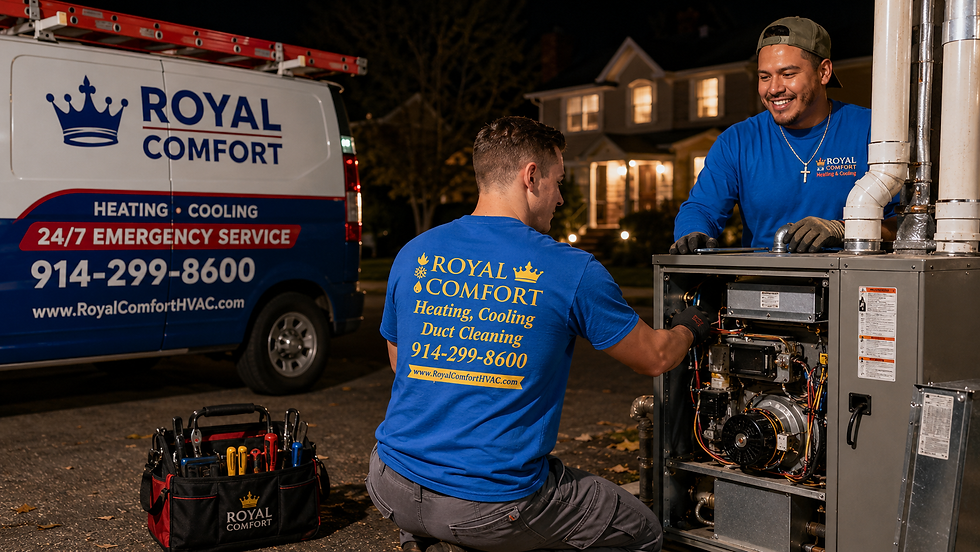
Why Homeowners Trust Royal Comfort for Emergency Heating Repair
When a heating system fails, homeowners need a company they can trust — not only for quick response but for honest assessment, transparent pricing, and reliable results.
Royal Comfort stands out because of its customer-first approach and commitment to quality.
Every technician is trained, certified, and experienced in diagnosing complex heating issues. They arrive ready to handle electrical problems, ignition failures, airflow issues, and emergency safety concerns.
2. Fully Stocked Service Vehicles
Royal Comfort technicians travel with vehicles stocked with common replacements, tools, and diagnostic equipment. This reduces repair time and ensures many issues can be resolved on the first visit.
3. Transparent Pricing
Homeowners appreciate clear explanations and honest recommendations. Royal Comfort provides upfront assessments, detailed evaluations, and guidance tailored to each household’s unique needs.
4. Respect for Your Home
Technicians take care to protect your floors, maintain cleanliness during the repair process, and treat your home with professionalism.
5. Safety-Focused Approach
Safety is a priority during every visit. Technicians test for combustion integrity, ventilation issues, carbon monoxide concerns, and electrical hazards.
6. Dependable Response Times
Heating emergencies can be stressful. Royal Comfort’s prompt response ensures homeowners regain comfort quickly and confidently.
Losing heat during cold weather is more than inconvenient — it can affect your comfort, safety, and ability to protect your home from damage. Whether your furnace refuses to start, blows cold air, shuts down unexpectedly, or produces unusual smells, knowing when and how to act is essential.
Emergency heating repair provides fast, dependable solutions when the unexpected happens. Understanding early warning signs, common causes of failure, and safe troubleshooting steps helps homeowners respond confidently. With regular maintenance, smart thermostat use, and attention to unusual system behavior, many emergencies can be prevented.
When problems do occur, having a trusted partner makes all the difference.
For fast, reliable emergency heating repair, contact Royal Comfort today. Skilled technicians are ready to restore warmth, protect your home, and ensure your heating system operates safely and efficiently.
Expanded FAQs
1. What qualifies as a heating emergency?
A heating emergency includes complete heat loss, rapid temperature drop, burning or electrical smells, loud mechanical noises, gas odors, or carbon monoxide alarms.
2. Why does my furnace blow cold air?
Cold air typically results from airflow problems, ignition failure, overheating shutdowns, flame sensor issues, or duct leaks.
3. How can I prevent heating emergencies?
Replace filters regularly, schedule annual maintenance, keep vents clear, inspect outdoor pipes during winter, and respond promptly to unusual noises or smells.
4. Should I troubleshoot my furnace myself?
Basic checks like thermostat settings, breaker inspections, and filter replacement are safe. Electrical, gas, or ignition issues require professional service.
5. How fast can emergency heating repair arrive?
Response times vary, but emergency services prioritize urgent cases and typically arrive much faster than standard appointments.
6. Does emergency service cost more?
Yes, emergency labor often includes after-hours or rapid-response fees. To understand the most significant cost influences, you can review our full resource that explains the key factors affecting furnace repair pricing.
7. When should I replace instead of repair?
Replace your furnace when it is old, inefficient, frequently breaking down, or requires a major component replacement approaching the cost of a new unit.
Comments